What Is LitRPG? Meaning, Subgenres and Where to Start
Updated 28 September 2026
LitRPG stands for literary role-playing game. It is fiction where the world runs on visible game rules: characters have levels, classes, skills and stat screens, gain experience, and read system messages that tell them what they just unlocked. The reader sees the numbers too, which turns every fight and every choice into a small puzzle.
The fun is in the climb. A LitRPG hero usually starts weak, works out how the system can be used, and grows stronger in steps you can follow. Well-known examples include Dungeon Crawler Carl, The Primal Hunter and He Who Fights with Monsters.
LitRPG, GameLit and progression fantasy
GameLit is the wider family: any story built around games or game-like worlds. LitRPG is the part of it where the game mechanics are on the page, with real numbers the character can see and use.
Progression fantasy shares the climb but drops the interface. Power comes from training, cultivation or magic, not from a level-up screen. Many readers enjoy both, and many stories mix them.
Common LitRPG subgenres
System apocalypse: the real world is suddenly taken over by a game system, with monsters, tutorials and levels, and people must adapt to survive.
Portal or isekai LitRPG: the hero is pulled into another world that runs on game rules.
Dungeon core: the main character is the dungeon, building traps and monsters to grow.
Crafting and base-building: power comes from making things, running a settlement or controlling supply, not only from fighting.
VRMMO: the story happens inside a virtual reality game, often with stakes in the real world.
Free LitRPG to start with
Every chapter free in your browser, no app and no account.
Best rated LitRPG
Level systems, skills and a lead who plans every step.
Soak and Simmer
- 8 Chapters
- 41 Pages
- 11,280 Words
The volcanic ridge of Hinode is supposed to be a militarized no-man's-land between the craggy baronies of Kamome and the river clans of Shiranu. Nobody told Shoma and Minami. Shoma, an easygoing stonecutter with a brand-new [Spring-Tender] System interface, just wanted to carve a thermal basin where weary laborers could soak their aching joints. Minami, a travelling [Infusionist] from the terraced valley paddies, simply needed a quiet grotto to steep medicinal berry teas that restore depleted stamina. When their paths collide at a steaming sulfur cleft along the contested frontier, their complementary crafts trigger an unprecedented resonance in the Sanative Way System. But rival frontier governors are already marching troop columns toward the pass to fortify the springs into border garrisons. Armed only with polished cedar tubs, restorative herbal brews, and an insatiable dedication to customer hospitality, the two young bathhouse operators must level their shared sanctuary into an internationally recognized haven of peace before open warfare claims the ridge.
Dry Steps Across Toba
- 8 Chapters
- 42 Pages
- 11,723 Words
In the prehistoric delta city of Toba, seventy muddy islets are linked by slippery log causeways, unsteady skiffs, and the quiet resignation of weavers and fishers coated in gray river muck up to their knees. Everyone accepts the mud as an unavoidable curse of the wet moons—everyone except Ranu, an unhurried stone-hauler who dislikes rushing and harbors a quiet obsession with flat, non-slip surfaces. When a luminous [Way-Maker] interface blinks to life before his eyes, Ranu discovers the system does not ask him to battle river beasts or conquer rival clans. Instead, every neighbor who crosses his hand-laid stones without twisting an ankle awards him experience, unlocking steady upgrades to friction, settlement, and sediment grip. With a heavy wooden mallet, a boatload of river cobbles, and a stubborn refusal to let the season's sweet-melon harvest sink into the quagmire, Ranu sets out to build Toba's very first permanent dry causeway, one level step at a time.
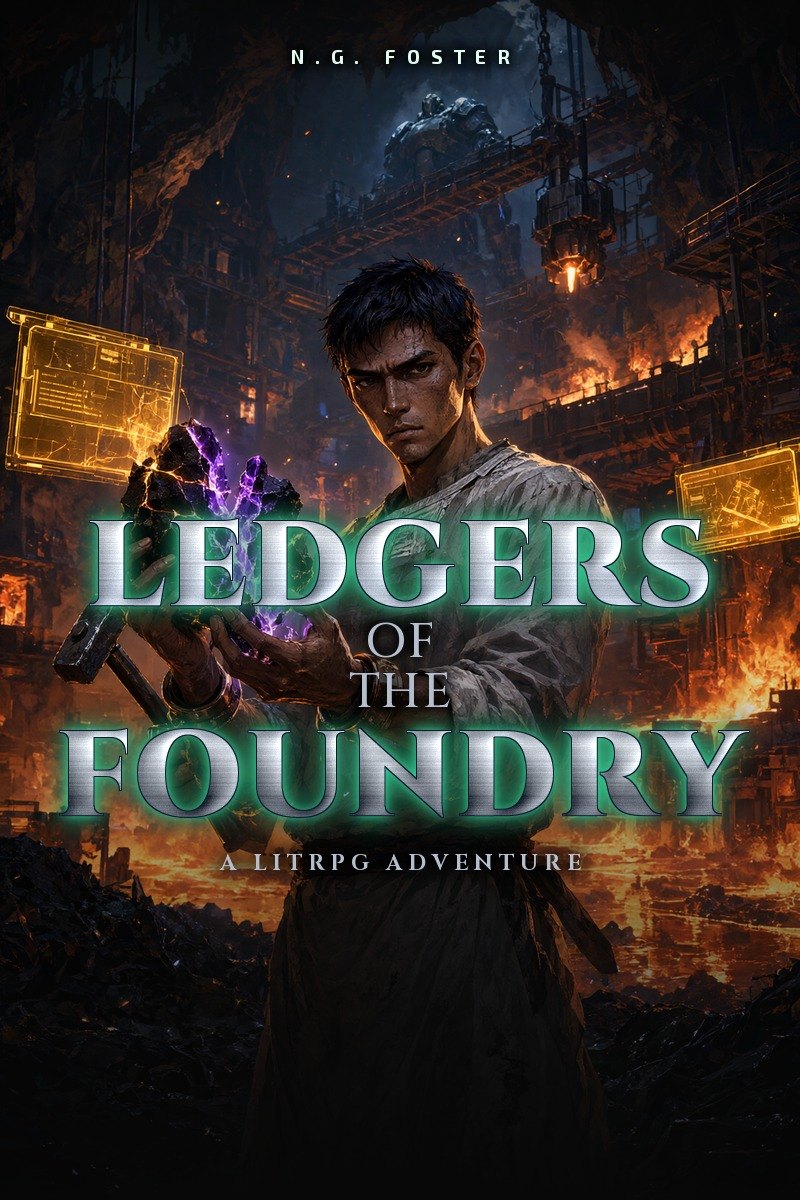
Ledgers of the Foundry
by N.G. Foster
- 23 Chapters
- 233 Pages
- 64,125 Words
- 4 Views
A LitRPG progression fantasy where the System turns on material transformation, logistics, and supply chains—not combat. Unjustly condemned by a network that feeds on prison labor, a negotiator who has lived their life without leverage wakes in a penal foundry to discover a broken crafting class. Through precise manipulation of raw materials and the complex ledger of debts that binds the condemned, they must forge a working pathway out. As they advance, three other viewpoints—a logistics runner, a debt-collector, and an appraiser—intersect, their distinct survival strategies weaving into one fight against the corrupt monopoly that benefits from the wrongful convictions. With zero combat power, every victory demands negotiation, tactical crafting, and flipping the system’s own supply chains against it.
Crafting and strategy LitRPG
Power from making, trading and running things, not only fighting.
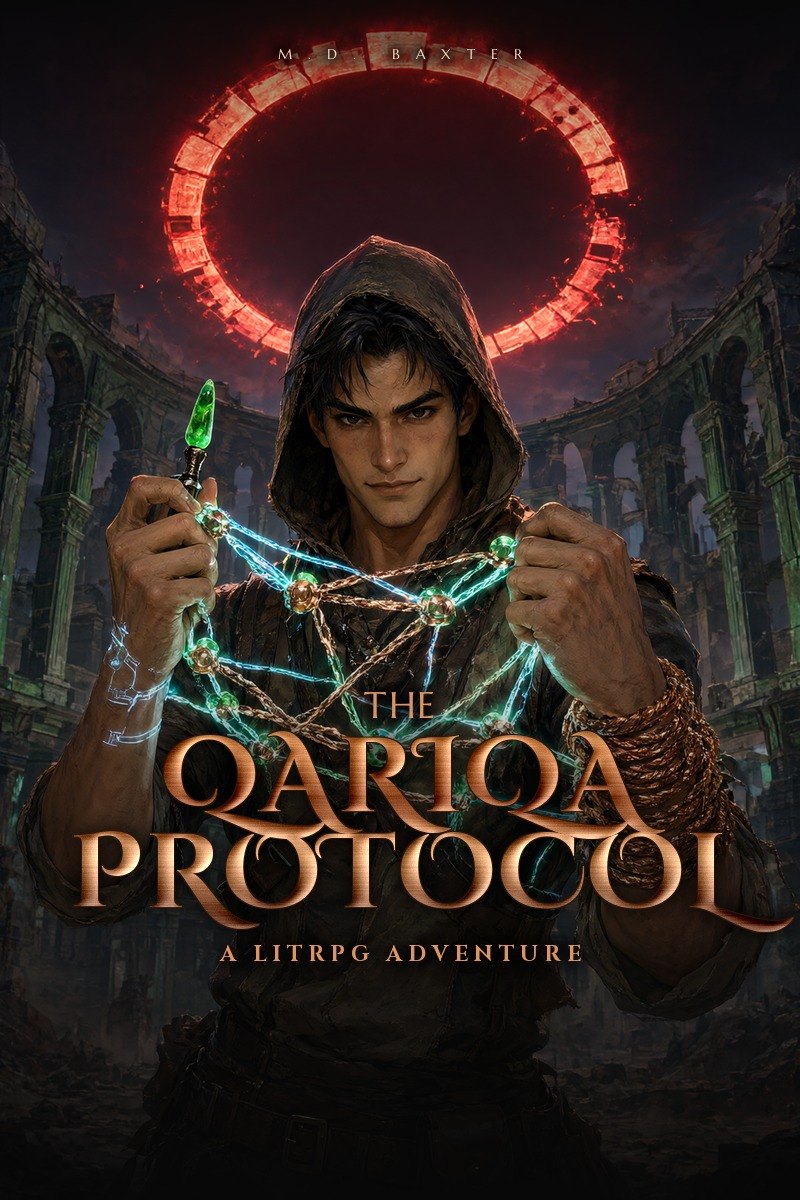
The Qariqa Protocol
by M.D. Baxter
- 16 Chapters
- 160 Pages
- 44,136 Words
- 7 Views
The System isn't a god. It's a bleeding, broken piece of code left to rot in the ruins of an old empire, and right now, it’s scheduling the entire city for a catastrophic purge.
Sayruqa doesn't have a flashy combat class or an over-tuned stat sheet. In a crumbling metropolis where everyone else relies on brute-force System menus to survive, he’s a Knot-Crafter—an interpreter of physical string-data that modern users dismiss as illiterate superstition. But when a fourteen-day countdown to a zone-wide incineration sparks to life in the sky, brute force isn't going to cut it.
To survive the impending collapse, Sayruqa has to drag his archaic craft out of the shadows. He’ll need to physically break the city's ancient ciphers, hijack permissions from heavily augmented enforcers, and level up not by grinding monsters, but by finding the lethal backdoors the original architects left behind. It’s a race against a ticking clock to claim the foundational tiers of a broken world, before the System inevitably crashes with him still inside it.
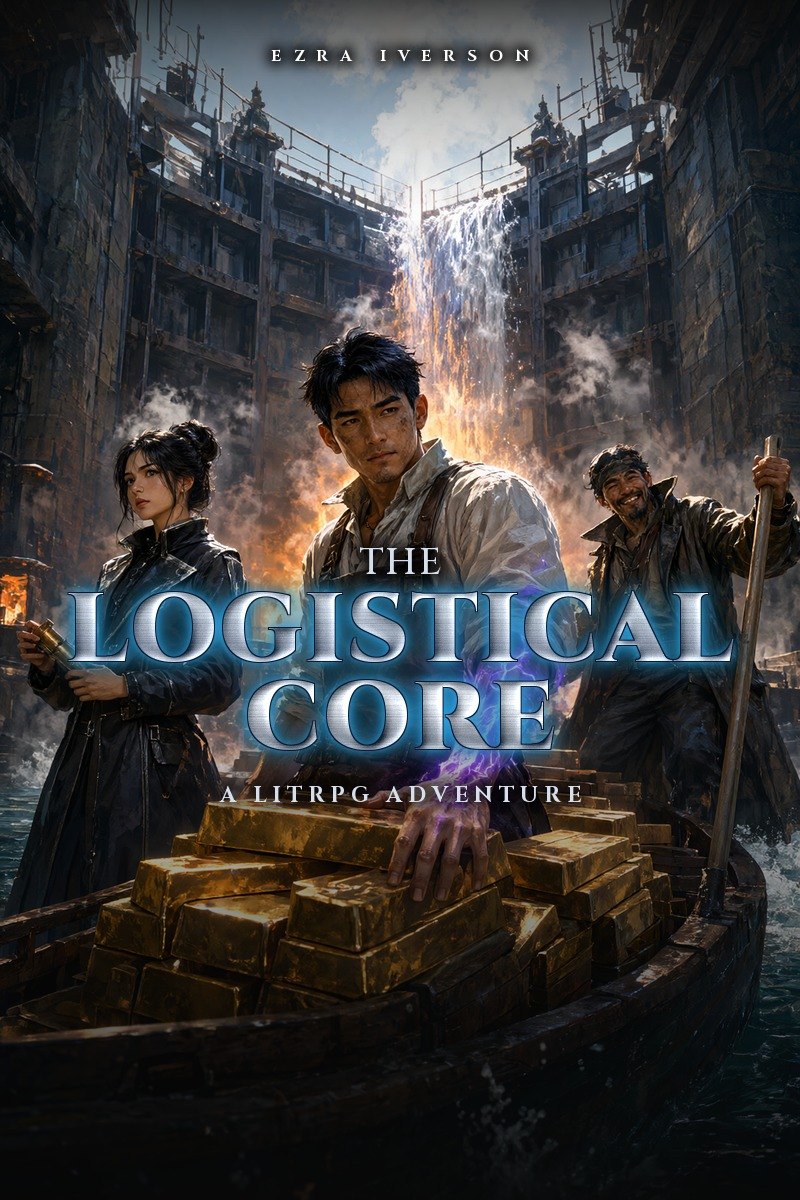
The Logistical Core
by Ezra Iverson
- 16 Chapters
- 173 Pages
- 47,712 Words
- 29 Views
The Architect’s Path isn’t built on spells—it’s built on logic, alloy, and leverage. Kusiqa was expelled from the Imperial Academy for failing theory while his hands could reshape truth. Now, marked by a bloodline that powers the system from within, he finds himself exiled to the deep logistical veins of a world reliant on precise crafting and complex supply chains. In a society where resources mean survival and every margin is measured, someone is siphoning the continent’s lifeblood. Kusiqa must use his practical brilliance to expose a systemic rot, forging his own tools, exploiting overlooked mechanics, and proving that the hands of a supposed failure can dismantle the powers hunting him.
Paths of Cinder and Smoke
- 24 Chapters
- 170 Pages
- 46,898 Words
- 9 Views
The System is broken. Not "needs a patch" broken—it's actively rotting, managed by an underfunded bureaucracy that couldn't care less if a localized glitch wipes out a neighborhood. For Sorosh-ran, a gig-worker scraping by on the fraying edges of the sector, this is just Tuesday. He survives by practicing Censer-craft—an ancient, analog superstition in a world practically ruled by digital stats and prompt boxes.
But when a new anomaly starts crystallizing citizens from the inside out, the official readouts label it a minor hazard. The bureaucracy looks the other way. Sorosh’s fragrant smoke tells a different story.
Armed with his heavy brass censer, sheer stubbornness, and a desperate need for credits, Sorosh dives into the failing infrastructure to hunt down the Dross-taint. He's going to use the System's own blind spots to level up his discredited craft. He'll smash corrupted mechs, strip-mine the glitches for rare loot, and outsmart arrogant middle managers who rely too much on flawed data. Because if the Overseers won't fix the world's code, Sorosh will just have to burn it back to life, one sweet-smelling stat block at a time.
System apocalypse
The world breaks and a system decides who survives.
The Sinking Strata
by K.C. Quarrel
- 8 Chapters
- 44 Pages
- 12,267 Words
- 1 Views
The continent of Ard-Phail was always a miracle of engineering: a manufactured shelf of stone kept buoyant above the world-ocean by the steady thrum of ancient sub-crustal engines. For fifteen thousand years, empires rose and fell across its terraced peaks, believing the solid earth beneath their boots would endure forever. But the engines have reached the end of their designated cycle. The sea is not attacking with violent typhoons; it is rising smoothly, placidly, two handspans every dawn, as the continent begins its programmed descent into the deep. As ancient rivals watch their borders vanish beneath tranquil blue water, four observers must map the final migration across the vanishing highlands, learning what remains of human worth when the ground itself says goodbye.
The Bell-Gate Crucible
by L.E. Brand
- 8 Chapters
- 44 Pages
- 12,103 Words
Across seven shattered volcanic worlds suspended in an orbital void, war is fought straight downward through the Gate-Wells: colossal basalt shafts where massive bronze bells ring open pathways between the stars. Keldrund is the vanguard's chief founder, an ear-trained artisan whose knuckles can detect a hairline fracture in molten alloy before the pour even cools. His task is to cast the harmonic bronze instruments that keep the pathways open for Warlord Ravnsk's bronze-clad chariots and spearmen. But when Ravnsk launches a ruthless campaign to ring open all seven wells simultaneously, Keldrund hears what the bloodthirsty warlords ignore. The wells are not divine portals left by benevolent gods; they are exhaust valves and automated terraforming regulators for an ancient orbital machine. Striking all seven bells at once will not forge an empire across the void—it will activate a planetary purge that incinerates every fragment in ash. To protect his apprentice and prevent the extinction of seven worlds, Keldrund must wage a silent, paranoid war of sabotage from inside the vanguard's forge, turning his craft into a weapon while surrounded by fanatical killers.
Vesper of Pale Lights
by O.H. Halvard
- 8 Chapters
- 37 Pages
- 10,283 Words
As a rogue, unstoppable wave of architectural nanites silently crystallizes the Jovian habitats into inert light-sculptures, humanity's time in the outer solar system comes to an end. Amidst the slow, beautiful apocalypse, three orbital caretakers—an structural architect, a deep-trench haul pilot, and an ecological curator—must race against the encroaching tide. Bound by duty and their own deadpan domestic banter, they desperately ferry the last remnants of human culture and botanical life ahead of the transformation. But as the crystalline infection leaps from station to station, they face the agonizing choice of what to save, what to leave behind, and what it truly means to preserve a legacy in a dying system.
Questions readers ask
What does LitRPG stand for?
LitRPG stands for literary role-playing game: fiction whose world runs on game mechanics like levels, skills and stats that the characters can see.
What is the difference between LitRPG and GameLit?
GameLit is any story built around games or game-like worlds. LitRPG is the narrower group where the game mechanics, such as numbers, levels and system messages, are shown on the page.
Is LitRPG the same as progression fantasy?
No, but they overlap. Both follow a character who grows stronger. LitRPG shows that growth through a game system. Progression fantasy shows it through training or magic without the interface.
Where can I read LitRPG for free?
Royal Road hosts a large free LitRPG catalogue. On Stories Circle every LitRPG story is free to read in the browser, every chapter, with no coins and no app.