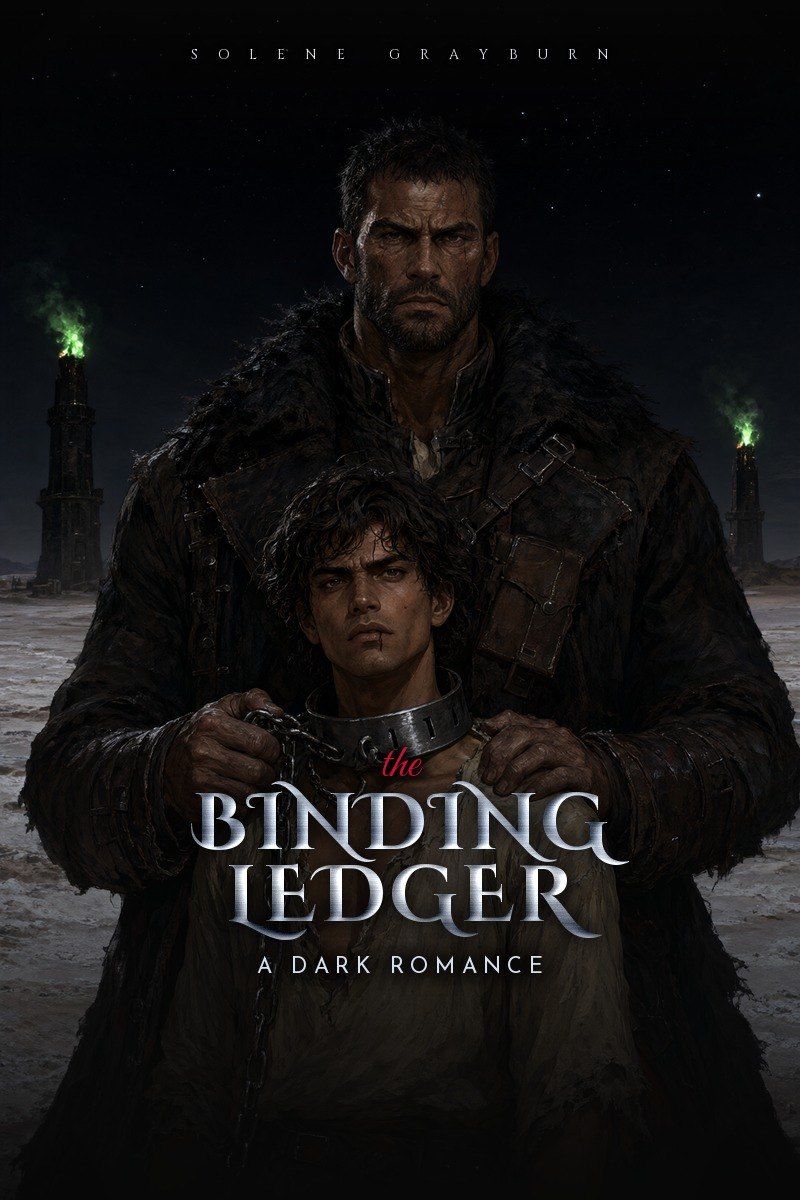
Chapter 7
The desert does not blow sand when the big gales come down from the salt ridges. It blows ground glass.
The grit hits the cedar siding of wagon three with a sustained, dry hiss, like a shovel scraping across gravel. The whole chassis shudders on its iron leaf springs. Every ten seconds, a heavy gust slams into the reinforced oak ribs, rocking the freight hold two inches to the left before the axle chains haul it back.
I sit on the rough floor planks with my back against the forward bulkhead, knees drawn up, feet bare against the cold timber.
My sixth rib pulses beneath four layers of coarse linen. Tariq pulled the wrapping tight enough to leave creases in my skin, but when I draw air deep into my belly, the sharp snap of displaced bone is gone. The dull ache is just muscle and bruised marrow. I can move with that. A thief who stops moving because of a bruised rib usually dies in a ditch before his boots get cold.
Outside, the wind screams through the wheel spokes.
The caravan halted two hours ago when the horizon turned the color of dried liver. Tariq called the circle—six wagons hauled nose to tail in a defensive crescent, wheels chained, camels hobbled in the lee of the high dunes, every outrider wrapped in greased wool to keep the red dust out of their lungs.
No one walks the camp in a haboob unless they have a guide rope hooked to their belt.
A heavy iron latch clatters against the external door frame.
I don't scramble. I keep my hands resting flat on my knees, wrists exposed, head tipped slightly back.
The hatch door pulls open two inches against the howling gale. A wall of blinding red dust swirls into the dark hold, carrying the smell of crushed shale, camel sweat, and burning tallow.
Samira slips through the gap, quick and low. She throws her shoulder into the oak door, slamming it shut before another pound of desert can spill inside. The external bar drops into its iron bracket with a heavy thud.
She stands by the door, unwinding three yards of dark linen from her face. Her cheekbones are raw from the grit, her dark eyes flat and black in the dim light filtering through the roof seams. She carries a leather water skin over one shoulder and a tin plate covered with a rag.
"You're alive," she says.
"The wagon has good timber," I say. My voice sounds scraped dry. "And your master didn't break anything he couldn't bind back together."
Samira steps across the floorboards. Her boots leave gray salt prints on the planks. She drops the tin plate near my feet. Two strips of salted mutton, hard enough to hammer nails, and half a flatbread stiffened by the dry heat. She drops the water skin beside it.
"Eat," she says. "The storm won't break before midnight. If you starve, he'll make me carry you."
I pick up the water skin, pull the wooden stopper with my teeth, and drink. The water tastes of old sheep bladder and sulfur, but it wets the gravel in my throat. I set it down and tear a strip of mutton with my molars, chewing slowly to keep my jaw from tightening.
"Where is he?" I ask.
"Wagon one," Samira says. She doesn't sit. She leans against the reinforcement frame, her bladed whip coiled tight at her right hip, the weighted pommel resting against her leather thigh guard. "Checking the axle tethers. Then writing in the ledger. He doesn't sleep during a blow."
"A busy man," I say. "All those ledgers. It must take hours to figure out what everyone owes him."
Her hand drops to the grip of her whip. She doesn't draw it, but the leather creaks under her fingers.
"You think you're clever, Qadir." Her voice is quiet, pitched just beneath the shriek of the storm outside. "You took the pin out of the axle at the Basin. You ran for the salt pillars. You thought Warden Basim's men would cut you loose or give you a horse."
"I thought they'd kill him," I say, chewing the tough meat. "I was willing to take my chances with the survivors."
"Basim is dead," she says flatly. "His three lancers are buried under two feet of salt crust. And Tariq carried you back here over his shoulder."
"He carried his property," I say. "Let's not confuse balance sheets with affection."
Samira watches me. She looks at my bare ankles, then at the linen wrap around my chest. Her mouth turns down at the corners—not pity, just the cold assessment of a soldier measuring worn leather before a forced march.
"Listen to me, thief," she says. She takes one deliberate step closer, her shadow falling across my knees. "I've ridden with Tariq since the Northern Marches. I've seen him flay an outrider for stealing three ounces of dried saffron. I've seen him break a merchant's fingers one by one to collect an unsealed promissory note."
"I saw him cave in three skulls with an iron mace," I tell her. "I have an excellent memory for detail."
"Then remember this," she says, leaning down until I can smell the bitter clove oil she uses to clean her whip blade. "He pulled you off that salt ridge because he needs a lock picked at the Broken Arch. Not because he likes your face. If you try another run during this storm, he won't bring you back. He'll take your hands at the wrists, cauterize the stumps in the forge coals, and leave you in the sand."
I look straight into her eyes.
"Hands are necessary for lockpicking, Samira. Even Tariq knows that."
"He only needs six fingers to guide the Ash-Guild key into the housing," she whispers. "The rest is luxury."
She doesn't wait for a reply. She turns, grabs the leather pull cord on the hatch, and shoulders the door open. A blast of howling red wind swallows her silhouette. The door slams shut, and the heavy iron bar drops into place from the outside.
I sit in the shuddering gloom.
The wind rattles the cedar planks like fist blows.
"Six fingers," I murmur to the empty freight hold. "Generous man."
I finish the mutton, swallowing the salty grease, and drink another swallow of sulfurous water. Then I set the skin aside and get to work.
My ribs complain with a sharp twinge as I lean forward, but the linen holds. I slide two fingers down into the inner lining of my right boot heel.
The brass tension shim is right where I wedged it—thin as a fingernail, flat, notched with five shallow grooves along its upper spine. I pull it out, holding it between my index finger and thumb.
Then I reach under the warped chassis timber near the corner bracket. My fingers brush the cold, stamped iron of the waypoint pass I took off Warden Basim's dead lancer. I leave the pass in its hiding spot. If I get caught with it on my body inside Tariq's wagon, there won't be a conversation about six fingers.
I stand up.
The hold pitches as another gust strikes the caravan. I brace my left hand against the roof beam, feeling the vibration of the storm hum through the wood.
The door of wagon three is secured from the outside by a drop-bar resting in two iron stirrups, locked with a standard heavy brass tumbler padlock through a forged hasp pin. For someone trapped inside, it's designed to be a prison.
For someone who understands leverage, it's just a sliding puzzle with an inch of clearance.
I step to the door seam. The wood has dried in the desert heat, leaving a three-millimeter gap between the oak planking and the jamb.
I slide the brass shim through the crack, right at the level of the padlock hasp.
The wind howls outside, masking the scrape of metal.
I feel for the lock's cylinder through the gap. The brass shim catches on the spring-loaded tumbler pins. One, two, three. I twist the shim, applying upward torque against the cylinder's shear line.
Click.
The padlock spring pops free. I ease the shackle out of the hasp pin, letting the lock hang loose on its chain.
Now the drop-bar.
I slide the shim four inches higher, feeling for the bevel of the heavy bar. The brass catches on the forged iron edge. I twist my wrist, applying upward torque. The bar resists—it weighs twenty pounds and sits heavy in its grease.
I shift my stance, planting my feet wide on the shifting floor, and wedge the shim deeper, using the door frame as a fulcrum.
The bar slides upward an eighth of an inch.
Scrape.
The sound is completely swallowed by the roar of the sandstorm.
I push again, levering the bar up until the tail clears the lower lip of the iron stirrup. A soft clack vibrates through the wood into my fingers.
The door drifts inward a fraction of an inch, pushed by the vacuum of the gale.
I pull the shim back, slip it between my teeth, and ease the door open three inches.
A wave of red dust hits my face like a thrown handful of pepper.
I shut my eyes to narrow slits, pulling the hem of my coarse linen tunic over my nose and mouth.
Outside, the world has vanished into an orange-red fury. The air is thick with flying grit, so dense that the next wagon in the circle—wagon two, twenty paces ahead—is nothing more than a hulking, dark smudge through the dust. The storm shrieks through the iron rigging, whipping canvas straps against wood with the cadence of rapid drumfire.
No guards are walking the perimeter. They are all huddled under the lee of the freight beds or tied off inside the supply wagons, waiting for the blow to pass.
I slip through the hatch.
My bare feet hit the churned, biting sand. The heat rising off the desert floor is suffocating, trapped beneath the rolling cloud of dust.
I drop low, keeping my belly three inches off the ground, moving beneath the chassis of wagon three. The smell of camel urine, axle tallow, and hot iron surrounds me.
I crawl from wheel to wheel.
Moving across open sand in a haboob will scour your skin raw, but it also erases footprints in three seconds. I keep my left hand touching the thick iron chain connecting wagon three's front axle to wagon two's rear hitch.
Two paces. Three.
The taut link leads me directly under wagon two. Crates of dried forage and casks of salted lard groan above my head.
I don't pause. I slide past the rear wheel, following the next chain toward the head of the crescent.
Wagon one is larger than the others—eight iron-banded wheels, double-walled cedar siding, reinforced with cold-rolled steel straps across the chassis. It serves as Tariq's mobile command post, his armory, and his private quarters.
I reach the forward axle and pull myself up between the rear leaf springs.
The storm screams overhead, tearing at the heavy canvas storm flaps covering the wagon's rear access hatch.
I reach up and test the hatch frame.
It isn't barred from the outside. Tariq doesn't lock himself into a cage. He uses an internal latch connected to an offset slide bolt on the upper sill.
I pull the brass shim from my mouth.
I slide the thin metal between the canvas gasket and the cedar door jamb, feeling for the bolt tongue.
Two seconds. Three.
The brass finds the iron tongue. I press sideways, feeling the internal spring resist. It's a precision bolt, clean and oiled, unlike the rusted hardware on the supply holds. I work the shim along the bevel, depressing the leaf spring until the tongue slips from its strike plate.
A tiny snick.
I push the hatch open two inches and listen.
Inside, there is no sound except the muted shudder of the storm against double-walled cedar and the faint, steady scratching of a steel nib against parchment.
Tariq is inside.
I freeze, crouched on the iron axle, grit biting into my bare ankles.
The scratching stops.
A heavy boot shifts against floorboards. Then comes the sound of a glass stopper being pressed into an ink jar, followed by the dry rustle of parchment being rolled.
"Samira," Tariq's voice rumbles from the forward cabin. Low, level, completely unhurried by the gale outside. "Did you secure the third wagon?"
Silence.
He isn't talking to someone in the room. He's expecting an answer from the storm outside, or perhaps he heard the wind rattle the rear hatch.
I hold my breath. My chest tightens against the linen wrap, the bruised rib protesting the lack of oxygen. I do not move a single muscle. I hang between the leaf springs like an abandoned coat.
Footsteps move toward the forward door—the access point leading to the driver's bench and the exterior storm ropes.
"Jalil," Tariq calls out, his voice sharp now. "Check the camel tethers on the south flank. The wind is shifting east."
A muffled shout answers from the storm outside—Jalil's strained, adolescent voice fighting the gale.
The forward heavy door creaks open. A sudden blast of howling wind tears through the cabin for three seconds, rattling maps and tin cups, before slamming shut with a concussive thud.
The heavy external iron latch drops on the outside.
Tariq just stepped out to inspect the picket line himself.
I have maybe six minutes before he finishes the rounds and returns to clear the dust from his beard.
I pull myself through the rear hatch, slide inside, and ease the door shut.
The air inside wagon one is cool and smells of cedar oil, bitter iron shavings, lamp tallow, and the sharp vinegar tang of gall ink.
A single brass oil lamp hangs from the center ceiling strut, its wick turned down to a low, amber glow.
The cabin is organized with brutal, mathematical precision. Along the left wall, three heavy iron-headed maces and five recurve bows hang from oiled leather loops. Along the right, narrow shelves hold stacked ledgers bound in pigskin, each labeled with dates, waystation coordinates, and wax seals.
In the center of the cabin sits Tariq's field desk—a massive oak table bolted directly to the chassis frame with four forged steel brackets.
On top of the desk lies an open ledger, a bone ruler, and a brass compass.
I step silently across the wool rug covering the floorboards, my bare feet making no sound.
The ledger on the desk is the operational log: water counts, outrider rations, the price paid to the station wardens before Tariq cracked Basim's skull. Standard bookkeeping for an armed merchant who calculates human lives in bushels of barley.
I'm not looking for barley.
I drop to my knees in front of the command chest secured beneath the desk.
The chest is banded in black iron, with a heavy, recessed three-pin sliding cipher lock built flush into the oak lid.
I recognize the mechanism immediately. An Ash-Guild three-phase sliding tumbler with a counter-weighted mercury drop-pin.
If you force the lid, the mercury vial tilts, drops a hardened steel sear into the inner hinge, and permanently jams the lock box while crushing two glass ampoules of vitriol over the contents inside.
A brute with a crowbar gets a box of burning ash and melted iron.
A thief with patience gets the truth.
I take a slow, measured breath, letting the pain in my ribs ground my focus.
I pull the brass shim from my fingers. I need a second point of tension. I reach up to Tariq's desk, slide the bone ruler toward me, and carefully snap off a two-inch sliver from its tapered edge using my molars.
Bone gives a softer feedback than steel. It won't shatter the glass vial if the tumbler clicks too hard.
I insert the bone sliver into the lower tension groove, applying a feather-light upward pressure to hold the shear line.
With my right hand, I slide the brass shim into the first sliding pin.
Click.
The pin lifts. The internal cylinder rotates a fraction of a millimeter.
Hold the bone.
I close my eyes. I don't look at the metal; I feel the vibration through the brass into the bones of my thumb and forefinger.
Second pin.
It has an offset false gate—a deliberate trap for amateur pickers. If I push it all the way to the ceiling, the mercury arm will swing two degrees to the left.
I ease the shim back half a notch. I feel the microscopic ridge where the true gate catches.
Tick.
The cylinder gives another millimeter.
The third pin is the heavy one, weighted with an iron slug to resist vibration.
I hold the bone sliver steady with my left thumb, my knuckles white from the strain. My chest aches as my lungs beg for air, but I keep my breath locked behind my teeth.
I nudge the third pin upward.
Smooth. Smooth.
A soft, oiled thump echoes inside the lock housing as the counter-weight settles into its cradle without disturbing the mercury.
The iron hasp disengages.
I open my eyes.
The lid lifts smoothly on greased brass hinges.
Inside the chest lie three items: a leather pouch filled with gold sovereigns stamped with the seal of the Southern Marches, an iron-bound portfolio wrapped in oilcloth, and a thick parchment folio tied with black cord.
I reach past the gold without a second glance. Gold is weight; weight slows you down; slow thieves die.
I pull out the parchment folio.
The cover bears the three-notched sigil of the Ash-Guild—the exact same mark stamped into the cold iron collar locked around my neck.
I untie the black cord with swift, quiet fingers and spread the leaves under the faint amber glow of the hanging lamp.
The first three pages are architectural cross-sections of the Broken Arch—an ancient fortified vault buried beneath the basalt cliffs at the southern edge of the salt basin. The drawings show three concentric perimeter rings, thirty-foot stone lintels, and a central vault door sealed with an eight-cylinder ward lock.
Beside the drawings are Tariq's notes, written in his dense, square script using purple gall ink.
Target: Southern Route Sovereign Charter. The original parchment granting perpetual tariff-free transit across the salt basin.
Value: Four hundred thousand dinars.
Security: Three wards. Ward One: Mechanical pin-tumbler, four-tier keyway. Solvable.
Ward Two: Ash-Guild resonance balance. Requires zero residual intent of theft. (Collateral Qadir ibn-Nadim matches operational profile via Principle of Return).
I scan down the page. My eyes stop at the final paragraph.
Ward Three: The Blood-Conduit Sear.
Beneath the title is a detailed schematic of the vault's central locking mechanism.
It isn't a mechanical keyway.
It is an arterial extraction cup forged from black basalt.
I read Tariq's notes, the cold words cutting through the warm cedar air of the cabin like an iron blade.
The third ward cannot be picked with steel. The mechanism requires an uncorrupted hand to maintain physical contact with the central conduit for seventy seconds while the vault core disengages. The conduit draws living arterial blood through the palms to break the glyph seal.
Beneath that, a single line in Tariq's handwriting:
Estimated blood loss to complete discharge: four to five pints. Survival rate of primary conduit: zero percent.
The room seems to lose all its heat.
I stare at the parchment.
Survival rate: zero percent.
Tariq didn't buy my debt from Malik to use me as a partner. He didn't promise me fifty dinars and my freedom because he intended to pay it.
He bought me because the vault door at the Broken Arch requires a sacrifice with a clean soul—a thief whose internal code prevents him from stealing for profit—to bleed out against the stone while Tariq walks away with the four-hundred-thousand-dinar charter.
He didn't buy a lockpicker.
He bought kindling.
A cold, sharp pressure settles in the center of my chest, completely drowning out the ache of my cracked rib.
Every word he told me in his tent—the talk of contracts, the balance of ledgers, the promise that compliance earns freedom—was a calculated lie designed to keep the livestock calm until it reaches the butcher's block.
Outside, the storm roars with deafening fury.
A heavy boot thuds against the exterior mounting step of the forward cabin.
The iron latch rattles.
I have five seconds.
I don't panic. My hands do not shake.
I flip the parchment folio shut, re-tie the black cord with a precise slipknot, and lay it back into the cedar chest in the exact position I found it.
I lower the iron-banded lid.
I press the hasp down until the three internal pins slide into their locked positions with a quiet click. I pull the brass shim, wipe the lock plate with the hem of my tunic to clear any finger grease, and pocket the bone sliver.
The forward door opens.
The wind screams as a wall of red grit and freezing air floods the cabin.
I slide beneath the rear bunk, pressing my back flat against the floorboards just as Tariq's heavy, mud-caked boots cross the threshold.
He slams the forward door shut and drops the heavy iron bar.
Tariq stands in the center of the cabin, shaking the dust from his heavy wool cloak. His breathing is steady, deep, rhythmic. He unbuckles his sword belt and drops it onto the oak desk with a heavy iron crash.
He steps toward the hanging lamp, turning the wick up.
From beneath the shadow of the bunk, I can see his profile in the amber light—the sharp, unyielding line of his jaw, the dark beard dusted with red salt, the cold, calculating eyes scanning the room.
He looks at the desk.
He looks at the ledger.
Then he looks down at the black iron chest.
His boots take two slow steps toward it. He pauses, his hand resting on the pommel of his dagger, staring at the lid.
I lie in the dust beneath the bunk, my ribs tight against the timber, my breathing suspended.
Tariq reaches down. His thick, calloused fingers brush the cold iron hasp.
He checks the lock.
The pins hold. The mercury vial rests undisturbed in its cradle.
Tariq turns away, walks to the washbasin, and pours water into a tin cup.
He drinks slowly, his back turned to the rear hatch.
I don't wait for him to turn around.
I ease backward, one silent inch at a time, reach the rear hatch, depress the internal slide bolt with my thumb, and melt into the screaming fury of the sandstorm.
The red gale swallows me instantly.
I crawl beneath the shuddering wagons, moving through the blinding dust until I reach the hatch of wagon three. I slip inside the freight hold, reach through the narrow door seam with the brass shim, guide the heavy external drop-bar down into its stirrup, and snap the padlock shackle closed against the hasp pin.
I sit on the cold cedar planks in the dark.
The haboob pounds against the outside walls like an invading army, but inside, my mind is completely clear.
Tariq thinks he owns the ledger.
He thinks he has my life measured out in pints of blood on a basalt stone.
I reach down, touch the iron collar at my throat, and trace the third flawed notch with my thumb.
He wants an uncorrupted hand to touch that vault.
I'm going to give him one.
And then I'm going to take his four-hundred-thousand-dinar charter and bleed him dry instead.

Comments
Loading comments…