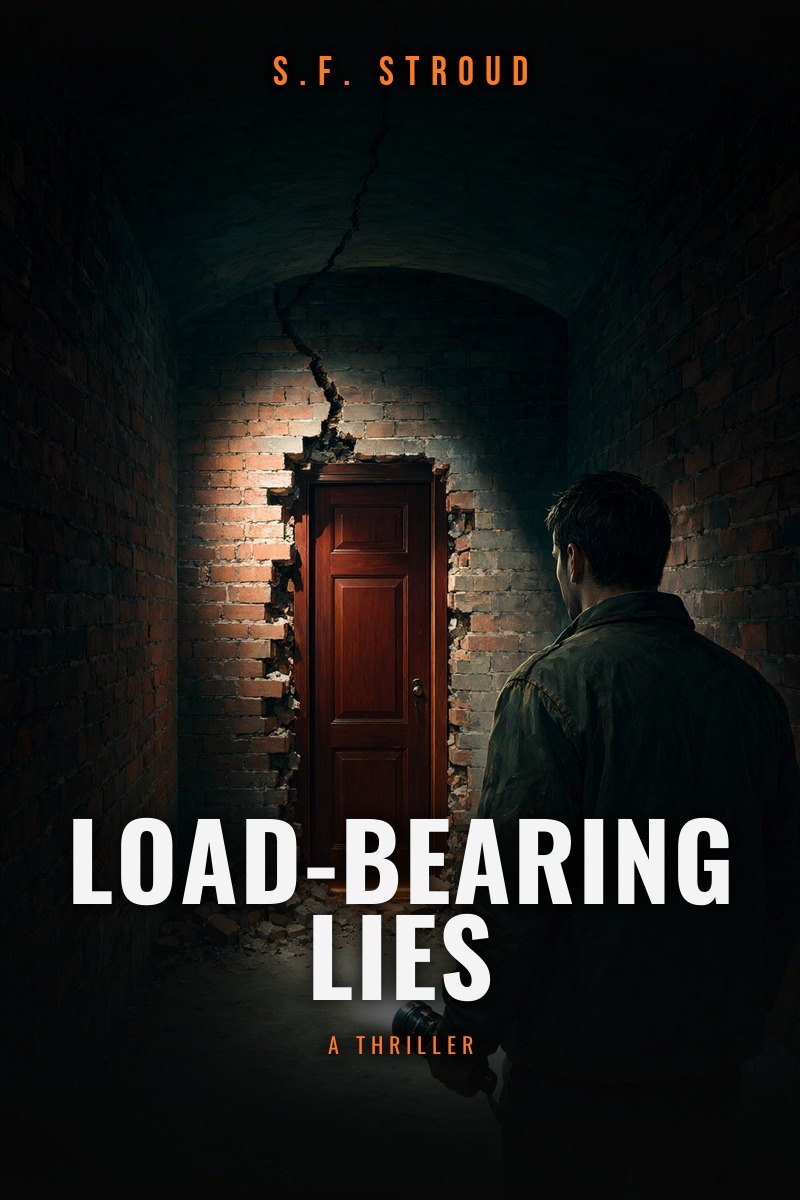
Chapter 12
The question on the third floor was not who had stolen the paintings, but where four metric tons of seasoned timber had gone without leaving an empty crate in the yard.
Detective Baran Kocatay did not knock. Having ignored Berkan's advice in the basement to leave the volumes behind, he had pocketed his paperweight, swept all three heavy canvas-bound ledgers from the archive table, and now held them firmly against his ribs as he turned the bronze handle of the director’s suite with his left hand and walked straight through the double doors. Berkan followed two paces behind, carrying the mahogany testing case he had brought up from Dr. Solaktay’s lab. In the outer anteroom, Ilkay Demirtay sat rigid on the edge of a horsehair sofa, his damp woolen scarf still knotted around his chin, watched over by a patrol officer Baran had summoned from the street post.
Vural Aktanbek was standing behind his mahogany desk with a fountain pen in his fingers and three separate telephone handsets cradled on the leather blotter. The morning light through the tall leaded windows hit the silver at his temples, emphasizing the grey pallor that had settled into his skin since Rustem’s arrest four hours earlier.
"Detective," Vural said, lowering the pen into its bronze groove. His voice had the careful, lubricated cadence of a man who dealt with insurance assessors for a living. "I was informed you were concluding your inventory downstairs. The executive committee has already scheduled an emergency briefing for three o'clock. We are issuing a statement through counsel clarifying that Mr. Sungurbek’s actions were entirely rogue, unauthorized, and confined to the single Dutch marine panel seized this morning."
Baran dropped the three canvas-bound ledgers onto the center of the desk.
The impact hit the mahogany with the dull, flat thud of five hundred pages of linen paper bound in calfskin. A small puff of dry cellar dust drifted across the green leather blotter, settling around Vural’s brass letter opener.
"Sit down, Director," Baran said.
Vural did not sit. He looked at the spine of the topmost volume. His pupils contracted. "These belong in the sub-basement archive. Mr. Demirtay has no authorization to remove founding ledgers without an executive requisition."
"Mr. Demirtay is sitting in your waiting room under police custody," Baran said evenly. "He has already signed an evidence surrender receipt. If you prefer to conduct this conversation under a formal warrant at precinct headquarters, my car is idling in the alley."
Vural's throat moved once. He pulled out his high-backed leather chair and lowered himself into it, keeping his palms flat on the armrests. "There is no need for theatrics, Detective. We have cooperated fully. A rogue director exploited our authentication protocols. He has been taken into custody. What else could these old books possibly establish?"
"They establish volume," Berkan said.
He set Nergiz’s mahogany box on the edge of the desk, clicked open the brass latches, and lifted the hinged lid. Inside, resting on the green velvet lining, lay the severed frame corner from 1894—the dark fifteenth-century Dalmatian walnut fused seamlessly to the pale nineteenth-century spruce core under hydraulic pressure and heat.
Vural stared at the wood. His fingers twitched on the leather armrest, but he kept his face rigid. "A salvage sample from the restoration workshops. We discard damaged moldings every month."
"This didn't come from the workshop scrap bin, Mr. Aktanbek," Berkan said. He pulled his structural notebook from his jacket pocket and laid it beside the open box. "This came from your founder's personal collection. And it wasn't discarded. It was rebuilt."
"Restoration is our primary mandate," Vural replied, his voice rising a fraction in pitch. "Conserving degraded substrates using period-compatible infill is standard museum practice."
"Infill doesn't require eight hundred tons of hydraulic clamping," Berkan said flatly. "It doesn't crush the tracheid cell walls of European oak until the annual rings flatten out under an assayer's microscope. And it doesn't crack forty inches of unreinforced basement concrete four separate times over seventy years."
Vural turned his gaze from the wood to Baran. "Detective, I fail to see why a demolition contractor is lecturing me on conservation history. Mr. Kayabek was retained to pull down the east wing, not to audit our nineteenth-century acquisitions."
Baran reached out and flipped open the topmost ledger. The linen pages fell open to the entries from October 1924, written in iron-gall ink beneath the municipal disposal stamps.
"Read entry seven-forty-eight, Director," Baran instructed.
Vural did not lean forward.
"Read it aloud," Baran repeated, his voice dropping into the quiet, lethal register he used when cornering suspects in interrogation cells. "Or I will have the court reporter downstairs transcribe it into the official record of your arrest."
Vural swallowed. He leaned forward over the desk, his knuckles whitening against the edge of the mahogany. His eyes tracked across the faded brown script.
"'Lot seven-forty-eight,'\" Vural read, his tone thin and mechanical. \"'Baltic oak panel, late seventeenth century. Severe dry rot along the vertical rebate. Value assessed at zero. Condemned for destructive material salvage under Schedule D. Authorized by Demir Aktanbek.'\"
"Now look at the certification file for the Courtyard at Delft panel," Baran said, tapping the opposite column. "Certified by Demir Aktanbek three weeks later. Sold to the Vanderhoof Trust for forty-five thousand gold liras. Where did the Baltic panel go, Director?"
"It was salvage," Vural said, his eyes darting toward the closed office doors. "Rotten panels are planed down for backing veneers. Every framing studio in Europe reuses period oak to stabilize warped boards."
"One panel, maybe," Berkan cut in. He stepped closer to the desk, turning a page in his own spiral notepad. "Let’s do the math, Mr. Aktanbek."
Vural looked up, frowning. "What math?"
"Mass," Berkan said. He tapped his pencil against the lined paper where columns of figures were neatly organized in engineering shorthand. "I spent the last two hours cross-referencing your Schedule D condemned manifests against the sub-basement slab cores I pulled this morning. In October 1924, your grandfather logged seven board feet of seventeenth-century oak and over three hundred board feet of Dalmatian walnut as scrap. Three weeks later, the foundation slab cracked from concentrated thermal deflection, and the House certified its first major Dutch masterwork."
Vural waved a dismissive hand. "A coincidence of scheduling."
"In April 1956," Berkan continued, ignoring the interruption, "your father, Harun Aktanbek, condemned one hundred and twenty board feet of Flemish paneling, citing termite infestation. Two weeks later, the basement slab cracked again, requiring a six-inch basalt pour to keep the central footing from punching through the gravel. And one week after that, Ozentay House certified the lost Ruisdael harbor scene."
Vural shifted in his chair. "Customs shrinkage. Storage decay. When lots are damaged in transit, they are written off. That is standard accounting."
"Metric tons aren't accounting drift," Berkan said, leaning his hands on the desk. "In November 1982, your aunt Perihan signed out three hundred board feet of aged walnut and forty linear yards of hand-loomed seventeenth-century linen. The foundation deflected another quarter-inch, requiring fiber-reinforced grout beneath the east piers. And three weeks later, you unveiled the Vermeer portrait."
The office grew completely quiet except for the muffled rumble of street traffic two floors below.
Vural’s gaze moved from Berkan’s notes to the open ledger, then to the severed frame corner resting on the green velvet. "These are circumstantial correlations. You cannot prove these materials were destroyed. They could have been sold to cabinetmakers. They could have been incinerated as biohazards."
"Wood has volume, Mr. Aktanbek," Berkan said, his voice level and immovable. "You don't lose four metric tons of antique timber to cabinetmakers without a bill of sale. And you don't burn it in a fireplace without someone smelling the varnish. Between 1924 and last week, this building swallowed roughly four point two metric tons of documented historical artifacts—panels, choir stalls, frames, stretchers, altarpiece fragments. All logged as worthless trash under Schedule D. All signed off by an Aktanbek."
Berkan tapped the open page of the ledger.
"And none of it ever left the building," Berkan said. "The delivery slips stop at the basement freight elevator. The scrap crates were never weighed at the loading dock. Cem Ozaltay’s grandfather ran that dock in the fifties, and his logs show zero outbound scrap manifests on every single date a foundation pour occurred. That timber didn't leave in a cart. It went into the sub-basement, and it came back upstairs as forty-million-dollar masterpieces."
Vural pressed his hands against his forehead. The smooth, practiced composure had completely melted away, leaving his face slack and hollowed out. "You don't understand the pressures. The House... the market was collapsing after the war. The great estates were being liquidated. Collectors wanted certainty. They wanted pieces that could survive modern laboratory testing."
"They wanted genuine age," Baran said. "And your family gave it to them by chopping up real history and feeding it to a machine."
"It wasn't a furnace!" Vural blurted out, his hands slamming down onto the blotter. He caught himself, his breath rattling in his throat, his eyes wide as if horrified by the sound of his own voice.
Baran did not move. He did not blink. "What was it, then?"
Vural looked at the closed doors leading to the anteroom, then back at the detective. A thin sheen of perspiration coated his upper lip. "It was... an asset. A proprietary process. My grandfather developed it with an engineer from the Austro-Hungarian rail commission during the occupation. It was intended for preservation. To bond degrading pigment layers onto structurally sound historical matrices so masterpieces wouldn't disintegrate."
"By crushing the donor wood until its cells collapsed," Berkan said.
"It was supposed to be rare," Vural said, his voice dropping into a desperate whisper. "An exceptional measure. For salvage! When my father passed and I assumed the directorship ten years ago, I was told the sub-basement held an archival stabilization chamber. An inert historical asset. I was assured it was only powered up when an irreplaceable piece required stabilization!"
"You signed off on Rustem's Bakhuizen panel," Baran pointed out coldly.
"Rustem brought me the certifications!" Vural insisted, his chest heaving. "He had Dr. Solaktay’s preliminary density numbers. He had the provenance receipts from the maritime trust. I knew we used donor substrate—I knew the backboard was seventeenth-century Baltic oak from our salvage reserves! I thought it was a restoration matrix, an honest backing to support fragile paint!"
"An honest backing that required fifty tons of Rewa heartwood wedged into the ceiling crawlway?" Berkan asked. "An honest backing that killed your chief conservator because she noticed the wood cells had been sheared flat?"
Vural flinched. He pulled his hands back from the desk as if the wood had turned red-hot. "Esen... Esen wasn't supposed to examine the core. Rustem was handling the acquisition privately. When she went down to the sub-basement on her own, she wasn't following protocol."
"She was doing her job," Berkan said. "And she found out your restoration matrix is a machine that burns through real art to fake paintings you sell to foreign collectors."
"I did not know the volume," Vural said. He grabbed the edge of the ledger, his voice cracking with genuine panic. "Look at the signatures! You have the books right there! After 1982, my name isn't on a single Schedule D transfer! Look at them!"
Baran turned the page to the modern manifests from 1995 to the present. The lines for executive authorization were indeed stamped with a blind institutional seal rather than Vural’s personal signature, but each stamp was initialed in faint, spidery violet ink.
"Who initialed these?" Baran demanded.
"Aunt Perihan," Vural whispered. He sank back into his chair, looking smaller inside his tailored woolen suit, his shoulders slumping under the weight of the confession. "She retired from the board in eighty-five, but she never relinquished the salvage inventory. She kept the keys to the Schedule D vaults. Whenever Rustem or my father needed material, they didn't come to the director’s office. They went to her townhome on the hill."
Berkan exchanged a quick look with Baran.
"You knew the chamber was down there," Berkan said. "You knew it took old wood to make new paintings."
"I thought it was a handful of scraps every decade," Vural said, his voice trembling. "A frame edge here. A sliver of backing oak there. I thought it was a tool to save paintings that were already dying! I didn't know about four tons. I swear to you on my father’s grave, I had no idea it was eating entire choir stalls and panel collections!"
"Where are the receipts for the modern transfers?" Baran asked.
Vural hesitated. His gaze flickered toward the tall mahogany credenza behind his desk, flanked by brass-fitted display cases.
"Director," Baran said, his tone tightening into an iron command. "You are currently standing on the threshold between being an unwitting accessory and an indicted co-conspirator in a seventy-year criminal syndicate. Rustem is already talking to prosecutors downtown. If you want any hope of staying out of a prison cell, you open that cabinet right now."
Vural closed his eyes. For five long seconds, the only sound was his shallow, uneven breathing.
Then he reached into his waistcoat, drew out a small brass key on a braided silk cord, and stood up on trembling legs. He walked around the desk, his expensive leather oxfords scuffing against the parquet floor, and unlocked the lower left door of the credenza.
From the dark recess inside, he pulled out a thick, black morocco-leather binder secured with an iron clasp. He did not open it. He carried it back to the desk and set it down in front of Baran like a live explosive.
"This is the family dispatch register," Vural said, his voice dead and empty. "It never went through the House registry. It bypassed the executive board, the tax assessors, and the conservation department. Every delivery of condemned material since my grandfather died is recorded here."
Baran unlatched the iron clasp and turned the cover.
Berkan leaned over the desk to read the entries. The handwriting was unmistakable: the same precise, razor-sharp copperplate script in violet ink that had signed the 1982 Vermeer transfer. But the dates did not stop forty years ago. They ran continuously through the nineties, through the two-thousands, right up to the present month.
And the lots were not minor damaged scraps.
"Lot eleven-oh-nine," Berkan read aloud, tracing a calloused finger down the page. "Fourteenth-century Tuscan walnut reredos. Sourced from an estate sale in Izmir, logged as total dry-rot loss, transferred to sub-basement bunker three. Lot twelve-forty: early Renaissance lime-wood predella panels. Logged as water-damaged fire salvage, transferred to bunker three."
He reached the final page. The ink on the last entry was barely two weeks old.
"Lot thirteen-eighty-two," Berkan said, his voice dropping into hard disbelief. "Eighteenth-century French boxwood carving. Transferred to sub-basement annex two days before Esen was killed. Initialed by P. Aktanbek."
"Two days before the murder," Baran noted, his eyes narrowing as he read the accompanying notation. "And look at the dispatch destination. It doesn't say the central chamber. It says the secondary intake vents."
Berkan looked at Vural. "The chamber isn't just running on old wood anymore, is it?"
Vural looked down at his desk, unable to meet their eyes. "The heat... she told me six months ago that the old matrix was losing efficiency. The seals were degrading. She said the chamber required higher combustion temperatures to fuse the modern polymers Rustem was using."
"Combustion temperatures," Berkan repeated, the cold logic of the basement crawlway snapping into place. "That’s why the floor deflected an inch and an eighth. That’s why there's fresh hydraulic cement and three new twenty-ton bottle jacks under the beams. You aren't just transferring age anymore. You're burning through structural material at three times the founding rate just to keep the pressure up."
"She said it was under control," Vural whispered, clutching the edge of his desk. "She said the structural survey was a formality. That you would sign off on the wing demolition and we could seal the lower level forever."
"Your aunt lied to you, Mr. Aktanbek," Baran said. He snapped the black morocco binder shut, took out an evidence bag from his trench coat, and slid the ledger inside. "And she used your signature on the building's operating licenses to do it."
Baran turned toward the door, then paused, looking back at the shattered director.
"You stay in this office," Baran ordered. "You do not touch a telephone. You do not speak to the executive board. If you step foot out of this room before my officers relieve you, I will have you processed for obstruction of justice and felony evidence tampering."
Vural did not look up. He sat motionless, staring at the empty space on his desk where the family ledgers had rested, his hands slack against his knees.
Berkan closed the lid of Nergiz's mahogany box, latched the catches, and picked up his notebook. He walked out behind the detective into the anteroom. Ilkay Demirtay looked up from the sofa with wide, terrified eyes as they passed, but Baran merely signaled the uniformed officer to maintain the perimeter.
They stepped out into the marble corridor of the third floor. Through the tall arched windows at the end of the hall, the slate roof of Perihan Aktanbek’s private villa was visible on the hillside above the city, cold and imposing against the gray autumn sky.
Baran tucked the bagged binder under his arm and looked at Berkan. "The paper trail is locked in evidence, but the prosecutor needs physical proof that the secondary intake is active before we touch that house on the hill."
"The books tell us what she ordered, Detective," Berkan said, turning toward the iron service stair that dropped three stories into the cellar foundations. "To prove what she's actually feeding that furnace today, we have to look inside the ash vents."
Baran pulled the heavy municipal seal tape from his coat, unclipped the master skeleton key he had seized from Vural's credenza, and pressed the cold brass into Berkan's palm. The stairwell yawned open into the damp dark below, leaving Berkan twenty minutes before the precinct reinforcement team arrived to breach the adjoining bunker wall and take the physical measure of the ash before Perihan could order the flues cleared.

Comments
Loading comments…