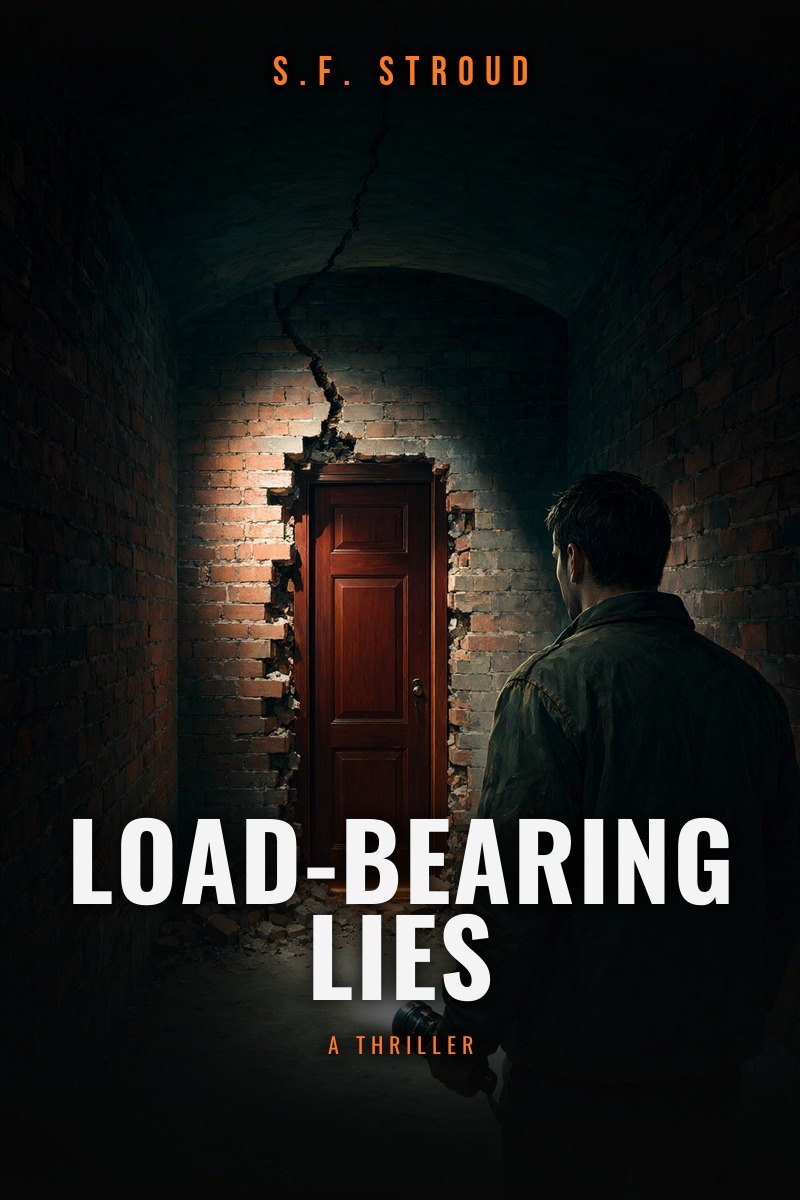
Chapter 8
Berkan wanted the extraction cuts to go clean, and he wanted Rustem Sungurbek walking through the loading-dock door within the hour, and for one bad second on Wednesday morning he thought he was going to get neither.
The Long Wing stood half-skinned already, its third floor open to the sky where the crew had stripped the roof decking the day before. Two hydraulic shears sat idling on the excavators like patient animals, jaws open, waiting on his word. Berkan stood at the safety perimeter with a radio in one hand and a structural sequence sheet in the other, and every fifteen minutes he ran the same private math: how long the trap could stay baited before the building itself stopped cooperating.
"Sequence three's a go whenever you say," said the operator nearest him, on loan from Berkan's old crew for the day, trusting his calls without asking why an unmarked sedan was parked where the delivery trucks usually went.
"Hold sequence three," Berkan said. "Nothing past the second floor until I clear it."
Across the lot, in the sedan, Baran Kocatay sat with two plainclothes officers and a thermos he hadn't opened in forty minutes. He'd told Berkan at six that morning, over coffee that had gone cold twice, that the whole operation rested on one honest assumption: that a man who'd rigged a death to look like an accident would not let his own evidence get buried under three hundred tons of brick without trying to stop it first.
Vural Aktanbek arrived at eight-fifteen in a car that still had House plates, though the House no longer had Berkan on its payroll. He crossed the lot with his coat buttoned against a wind that wasn't that cold, and stopped at the perimeter tape like a man unsure whether he still had the right to cross it.
"I don't have to be here," Vural said. "My aunt suggested I not be."
"But you're here," Berkan said.
"It's still my family's name on the door." Vural looked up at the stripped roofline, the open floor where morning light came through in a way it never had before, not in eighty years of this wing standing shut against it. "I'd rather watch it happen than read about it."
Rustem came at eight-forty, on foot from the street, carrying a slim leather folio like a man who'd stepped out for a working breakfast and remembered one more thing on his way back to the office. He had a visitor badge clipped to his lapel — Berkan noted that, filed it, House security hadn't revoked his access yet because nobody had told them to — and he lifted a hand toward Vural in a gesture that managed to look like grief and reassurance in the same motion. Furkan Delitay, the new engineer of record, was already up on the second floor calling the shot, working under a police safety hold that kept every sequence waiting on Berkan's word before it fired; Rustem didn't so much as glance his way, and neither did anyone else.
"I wanted to see it off," Rustem said. "Esen would have hated watching this wing come down. I thought somebody who loved the building should be here instead."
Berkan kept his face the way he kept it on any site: unbothered, watching load, not men. It was easier that way. A wall didn't lie to your face while it was falling on you.
Rustem didn't go toward the demolition crew, or toward Vural, or toward the small cluster of House staff gathered respectfully near the visitor entrance. He went toward the loading dock, unhurried, folio under his arm, and let himself through a door that a man from Acquisitions and Sales had no working reason to have a key to.
"He's moving," Berkan said into the radio, low.
"Copy," Baran said. "Let him get where he's going."
· · ·
Berkan gave the crew clearance on sequence two — second floor only, well clear of the loading dock and the stair Rustem had taken — because a demolition that stopped cold for no visible reason was its own kind of alarm, and because the schedule was the only leash they had on Rustem at all. The first shear closed on a load-bearing partition with a sound like a held breath let go, brick coughing dust into the light. The operator worked it clean, the way Berkan had taught half his old crew to work anything: patient, reading the material, never forcing a cut the wall wasn't ready to give.
He was watching the second shear bite into a timber header when he heard the wrong sound.
It came from below, not above — a scrape, a groan, and then a give, metal shifting load it hadn't carried in a hundred years. Berkan's whole body went still around it the way it went still around any sound a building made that wasn't on his sequence sheet. He had spent fourteen years learning the difference between a structure settling and a structure failing, and this was neither. This was something being helped along.
He ran the geometry in his head, fast, the way he'd run it a thousand times over blueprints that never quite matched what was actually built. The sub-basement stair Rustem had taken ran past a bank of temporary shoring — steel posts Berkan's own crew had jacked in last week to hold a section of ceiling that had lost its original support when the Long Wing's east footing settled, decades back, under weight nobody had ever explained to code. Those posts weren't decorative. They were the only thing between that ceiling and the floor.
And there was a floor safe under that section. Berkan knew it because he'd surveyed every square foot of that basement twice, and a safe recessed into the slab explained exactly the kind of evidence a man might need his own private key for — sample vials, a written report, the last physical thing that could still put a jury off him.
To get at it fast, without tools, a man in a hurry might pull the nearest thing holding weight out of his way.
"He's pulled a shoring post," Berkan said into the radio, already moving. "Section C-shoring, sub-basement stair landing. That ceiling was never re-certified after the east footing settled. It's not staged. It's real."
"Say that in plain terms," Baran said.
"In plain terms, if nobody stops him, it comes down on him in about ninety seconds, and it takes the evidence with it." Berkan was already past the perimeter tape, past a shout after him from the perimeter, radio in his teeth. "Hold sequence three. Get your team to the loading-dock stair, not the front — the loading dock. I'll be ahead of you."
He didn't wait to hear Baran agree. He was already through the door Rustem had gone through, into a stairwell that smelled like wet concrete and cut wood, taking the steps two at a time with the particular economy of a man who has never once, in fourteen years, hurried toward a building doing something it shouldn't.
· · ·
He found Rustem at the landing, folio open on the floor beside him, both hands wrapped around the neck of a steel post he'd already worked halfway loose from its base plate. A hairline crack had opened across the slab above him, thin as a pencil line and getting wider while Berkan watched, dust sifting down from it in a fine, patient rain.
"Stop pulling on that," Berkan said, and kept his voice at the pitch he used for spooked animals and green apprentices, level, unhurried, no weight in it a scared man could push against. "Rustem. Stop."
Rustem looked up. Whatever he'd rehearsed for this moment, it hadn't included Berkan Kayabek arriving alone, out of breath, telling him to be careful.
"You shouldn't be down here," Rustem said. "This isn't your site anymore."
"No. But that post is the only thing keeping about four tons of slab off both our heads, and you've got it walking. Feel it?" Berkan crouched a few feet off, close enough to talk, far enough not to add his own weight to whatever the floor could still take. "It's not a straight drop. It's a hinge failure. The crack runs east to west, which means when it lets go, it lets go toward the stairwell, not away from it. You're standing exactly where it wants to land."
He watched that find its mark. Rustem's hands didn't leave the post, but they stopped pulling.
"There's a safe under this landing," Berkan said, mild, like he was discussing a load rating over coffee. "I've known about it since my first walkthrough. I never told anybody, because it wasn't mine to open, and it wasn't relevant to a safety survey. It's relevant now. What's in the folio?"
"Nothing that's yours to see."
"It's Esen's, isn't it. The report she wrote before you killed her for it."
Feet on the stairs above — several sets, fast, and Baran's voice calling floor numbers to someone behind him. Rustem's eyes went up toward the sound and something in his face came loose, the charm sliding off it the way plaster came off a wall that had been holding water too long behind it.
"Two feet," Berkan said, quiet, and pointed without moving his arm far. "There. That's slab still on solid bearing. Get onto it and off that post, and we can keep talking without the ceiling joining in."
For three full seconds, Rustem didn't move. Then, slow, like it cost him something to admit Berkan was right about anything, he let go of the post and stepped sideways onto the two feet of floor Berkan had marked. The crack above them widened another half-inch and held.
Baran came down the last flight with his weapon low and his badge out, two officers behind him, and stopped at the top of the landing to take in the picture: the cracked ceiling, the leaning post, the folio still open on the floor between two men who'd both, in their own ways, spent this whole investigation reading the same building for two different truths.
"Rustem Sungurbek," Baran said, in the same flat, complete-sentence voice he used for everything, as if he were reading a room's temperature off a wall thermometer instead of an arrest into a case file. "Step away from the evidence."
· · ·
They did it properly, once the shoring crew had a temporary jack under the section and Berkan had cleared the landing as safe to stand on. Vural came down when Baran allowed it, pale, silent, staring at the folio like it might still be innocent if he didn't look at it too closely. Camlitay came down behind him with a coil of rope over one shoulder, out of habit more than need, and stood at the back of the little crowd the way he stood at the back of every crowd in this building, watching the structure, not the drama.
"Open it," Baran said to one of his officers, and they did, on a folding table someone had dragged in from the loading dock.
Sample vials, six of them, labeled in a careful, cramped hand Berkan recognized from evidence photographs of Esen's office. A dating report, fourteen pages, with a section near the end flagged in three colors of ink. A cover letter addressed to the House board, dated the morning she died, never sent.
"She flagged the Kesikoy panel's ground layer as anachronistic," Baran read aloud, flat, giving no one the satisfaction of hearing him react to it. "Zinc white in a lead-ground period piece. Forty-million-dollar sale, and she was going to kill it in committee."
"She was going to kill me," Rustem said, and there was no charm left in it at all, just a man doing arithmetic out loud because the arithmetic was the only thing left to hold onto. "Fourteen years building relationships with people who don't forgive being wrong twice. That sale wasn't a commission. It was collateral on three other deals that don't survive it collapsing."
"So you rigged the collapse five days early," Berkan said. "A wedge cut on the support timber, patinated to look old, set to fail under load whenever somebody finally pulled that panel for the demolition survey. You weren't in the building when it happened. That's true. You told Kocatay that yourself, and it checked out."
"It did check out."
"Because you made sure it would. You didn't need to be there when she died. You needed people to think that meant you weren't responsible for it." Berkan nodded at the folio on the table. "Technically true. Doesn't make it not murder."
Rustem didn't answer that. He looked, instead, at Vural, and something almost like an apology moved across his face before he put it away.
"For what it's worth," Rustem said, "I never meant for Sevil to end up in the hospital. I only needed her quiet until the demolition. I borrowed a coat from the front-of-house closet so nobody would place me on the security log that night. It wasn't Vural's."
Baran's officer, checking a printout, confirmed it inside a minute: the front-of-house coat closet near the education wing kept six identical herringbone coats for senior staff working donor events, checked out and returned on a shared badge log. Vural's own coat, monogrammed, had been in his office closet the whole evening, confirmed twice over by his assistant's calendar and a security still. Rustem had signed one of the pool coats out at six-fifty that evening and back in at seven-forty, a half hour after Sevil went down.
"I never thought anyone would check a coat closet," Rustem said, almost admiring it, the way a man admires a lock he didn't think to pick.
"People who don't do this for a living never do," Baran said.
· · ·
Ilkay Demirtay had been standing at the edge of the group the whole time, hands jammed in his pockets, flinching at every word like it might land on him personally. Baran turned to him last, not unkindly.
"Mr. Demirtay. Your fear this past week wasn't about Ms. Baturhan."
"No." Ilkay's voice cracked on the single syllable. "It was about — twenty-two years ago, a director told me to backdate customs stamps on three deaccessioned pieces. I did it because I was twenty-four and scared of losing the job. I've been waiting for someone to finally look closely enough to catch it. I thought that's what all this was."
"It might still be, eventually," Baran said. "It isn't today."
Camlitay grunted from the back of the group, arms crossed. "And me? I know you had somebody run my night logs."
"Routine," Baran said. "Boiler checks, three nights that week, all logged and confirmed by the maintenance system independent of anything you could've faked. You're clear, Mr. Camlitay. You have been since Tuesday."
"Good." Camlitay looked at Berkan, and something almost like humor moved under the gruffness. "Would've hated to get arrested for a building I've kept standing longer than any of these men have owned it."
"You and me both," Berkan said, and meant it enough that Camlitay's mouth twitched, the closest thing to a laugh either of them had traded all week.
Vural, when Baran's officer finally cuffed Rustem and read him his rights in the same flat cadence Baran used for everything, said nothing at all for a long moment. Then, quiet, mostly to himself: "I kept the sub-basement off the blueprints because my father told me to, and his father told him. I thought it was about the family's dignity. I didn't know it was about this."
"You'll get the chance to find out what it was about," Berkan said. "Whether you want it or not."
Vural didn't answer that either. He just watched Rustem go, up the stairs, between two officers, past the crack in the ceiling that had almost taken them both down twenty minutes before.
· · ·
Past the false wall and down the thirty-one steps Berkan had counted on the first day, a second door stood at the far end of the sub-basement corridor — the inner one, sealed since the techs finished with the body, that no blueprint the House would admit to owning had ever shown. Baran had cleared it for a structural look before evidence recovery went any further, and for the first time in nine days of reading this building from the outside in, Berkan Kayabek was allowed to walk through it.
The chamber wasn't large. That surprised him first, the way a coffin always looked smaller than the person it was built for. The walls were lined in a dark, seamless material that didn't match any masonry course he'd read anywhere else in the building, no mortar joints, no tool marks, no century of small human corrections. At the center stood a low steel table, cold to the eye even before he touched it, its surface scarred in a pattern that looked less like wear and more like breathing — concentric rings, fine as growth in old wood, radiating from a point dead center.
He crouched by the base of the wall and read the floor the way he read every floor: for load, for settlement, for what the building was quietly confessing about itself. The slab here had been poured and repoured at least four times, each layer slightly different in aggregate, slightly different in age, like rings in a tree that had been cut and grafted and cut again. Whatever had happened in this room, it had happened again and again, long enough to leave scars in the concrete itself.
"You won't find a code violation," a voice said behind him, unhurried, precise. "My family has had eighty years to make sure of that."
Berkan turned. Perihan Aktanbek stood in the doorway in a plain gray coat, hands folded, watching the room the way an owner watches something she built with her own hands and has never once needed to explain.
"You weren't supposed to be on site today," Berkan said.
"I am rarely where I am supposed to be." She didn't move from the doorway. Behind her, faint, he could still hear Baran's officers logging the arrest, Vural's low, unsteady voice answering a question Berkan couldn't make out. "You caught a greedy man killing to protect a bad sale. That is a real thing, and I imagine it feels like an ending."
"It is an ending. For him."
"It is the smallest possible ending available to you." Perihan's gaze moved once around the chamber, slow, almost fond, and came back to rest on him. "You have been reading this building for nine days as if it would tell you everything, given enough time. It will not. It has been telling my family the truth for three generations, and we have only ever told it what we needed it to hear back." She inclined her head, not quite a bow, not quite dismissal. "You will want a structural survey of your own before you understand what you actually found, Mr. Kayabek. I would start soon."
She left before he could answer, unhurried, her footsteps fading up the corridor toward the sound of an arrest that had already, somehow, stopped being the largest thing in the building.
Berkan keyed his radio. "Baran. Hold every crew off this sub-basement. Nobody touches this room, this wing, or anything below grade until I've surveyed it myself — floor to footing."
"You cleared the landing an hour ago," Baran's voice came back, flat, already suspicious of the change in him.
"I cleared it for a body and an arrest. I didn't clear it for this." Berkan looked once more at the scarred steel table, the seamless walls, the four mismatched pours in the slab. "I want the whole chamber on paper before anybody else decides what it is."
Perihan's voice came back down the corridor, unhurried, not raised, not needing to be. "You'll find the paper agrees with me, Mr. Kayabek. It always has." Then her footsteps resumed, and did not stop again — and Berkan stood there with the radio still keyed, hearing how neatly he'd just told a woman who had run this house for fifty years exactly what he meant to go looking for next.

Comments
Loading comments…